





Gepubliceerd: 13 november 2009 Laatste wijziging: 24 juni 2010
Toespraak van burgemeester Van Aartsen tijdens conferentie ter gelegenheid van 80 jarig bestaan Haagse Hotelschool, 13 November 2009.
1929. A year which most of us associate above all with the huge stock market crash, the beginning of a worldwide economic crisis. The real one. Even so the last year of the roaring twenties was also memorable for other reasons. For The Hague too. It was in that year that our famous arcade the Passage was dramatically expanded and, in the centre of The Hague, there was a major breakthrough opening up the city in the direction of the Kalvermarkt. It was in that year, too, that the Hotelschool in The Hague was founded.
Eighty years is a respectable age for anyone. An education institute in the field of hospitality management like the Hotelschool can be rightly proud of its long track record. Certainly if one thinks how the Hotelschool, in the past eighty decades, has developed to become a higher vocational institute of international renown, which makes a major contribution to The Hague's position as a city of knowledge and education. It has found exactly the right niche for itself in a city which is home to two of the oldest and most famous hotels in the Netherlands: Hotel Des Indes and the Kurhaus, the more than appropriate venue of this conference.
I regard it therefore as a great honour to be here today to address you and congratulate the Hotelschool very warmly on its anniversary.
This week, the world celebrated the twentieth anniversary of the fall of the Berlin Wall. The imposing images of twenty years ago were again present for all to see. This historic event not only put an end to the unnatural division of Berlin, in the end it also had far-reaching consequences for The Hague.
For it was the end of the Cold War that really accelerated the process of European unification and international cooperation in the fields of peace, justice and international law. And that development was an enormous impulse for The Hague as European and international city. The Hague went through a real Renaissance as City of Peace and Justice and new, pioneering organisations were established here.
At the same time, major international companies also moved to The Hague.
As a result, the international community in The Hague grew rapidly. To make sure that its members feel at home in their new setting as soon as possible, the local authority does its best to help. We’re very keen to ensure that they can quickly get their lives here organised and live here happily. If we can help, we are only too happy to do so.
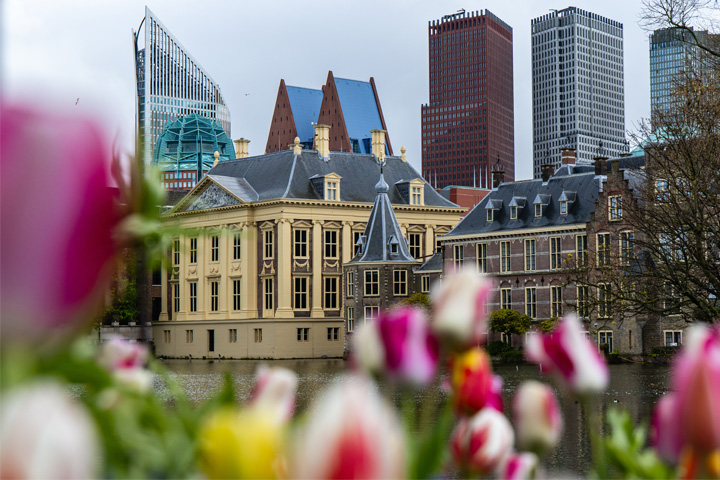
The fact is that, at the end of the day, besides the embassies, the international organisations and the international companies, it is above all the people who work there that give The Hague its cosmopolitan aura. Our city has a great deal to offer, including some of the most beautiful museums in the world. The Mauritshuis Royal Picture Gallery has even been celebrated in the New York Times. The Hague also plays a leading role in the world of modern dance. Of course, the city is also home to beautiful squares and streets, including Lange Voorhout, and the beaches of Scheveningen and Kijkduin. We have an especially rich range of shops and The Hague rates highly in culinary guides such as Gault-Millau and Michelin.
All of this naturally attracts numerous visitors to The Hague: last year, we welcomed more than 32 million. Just like the international community resident in the city, all of these visitors are a major boost to the economy of The Hague. This is why, in the coming years, The Hague plans to make significant investments in an essential ingredient in any international city: hospitality.
The theme of this conference is ‘The Hospitality Industry in two thousand and twenty nine (2029)’. So where do we currently stand, here in The Hague, in terms of hospitality?
Well, first of all, by two thousand and twenty nine there will be parts of the city you will not even recognise, just like someone who has not visited our city for twenty years will barely recognise certain neighbourhoods and streets at this moment.
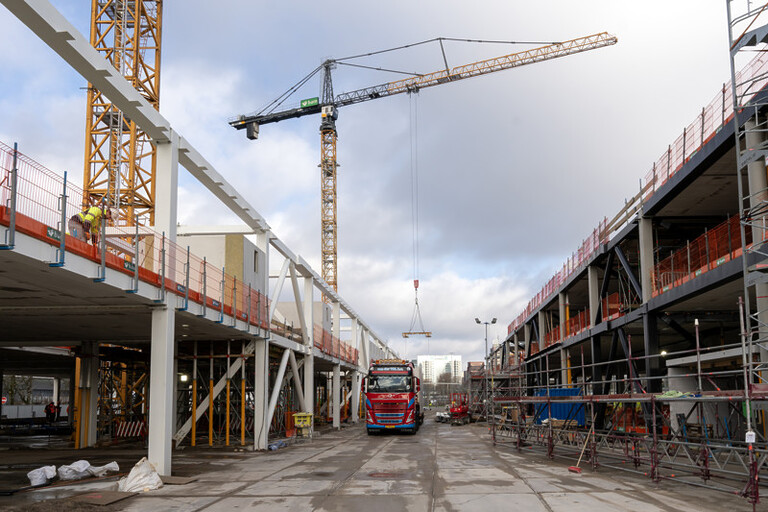
Perhaps not quite as dramatically as Potsdam Square in Berlin, but The Hague has of course undergone enormous changes in recent decades. This process of transformation is far from complete. In the coming years, the area around the Ministries of Foreign Affairs and Justice and Spui will be next in line for development.
Two of the Netherlands’ ten tallest buildings can be found here in The Hague: the Hoftoren and the Strijkijzer. The Kroon, to be built on the site of the Black Madonna building, is set to become the third The Hague building on that list. This is of course what one would expect in our international city of peace and justice. State-of-the-art architecture deserves to be a part of this. False modesty has no place here. After all, this is The Hague, the UN’s second city and legal capital of the world. These buildings play an essential role in marketing our city.
In addition, we are making significant improvements to the accessibility of The Hague. Recent examples include the Noordelijke Randweg or northern ring road and the Hubertus tunnel. Next month, the airport at Zestienhoven will be renamed Rotterdam/The Hague Airport. In the near future, there will be a rapid shuttle connection via Randstadrail, linking the airport to Rotterdam and The Hague.
Panta rhei, everything is in a state of flux. This applies to more than just the city's external appearance. By two thousand and twenty nine, the population of The Hague will also have changed: it will have become even more international and cosmopolitan. The new international organisations and knowledge institutes will attract even more people to our city. Major international conferences, such as the Afghanistan Summit, will be the order of the day. In some places, you will hear English spoken more often than Dutch. Not only in international organisations, but also in lecture rooms, restaurants, shops and on the streets.
Around a hundred years ago, the famous architect Berlage was inspired by the belief in progress spread by the Peace conferences held at that time and designed a capital city based on internationalism, perched in the dunes near Scheveningen. More than a century later, we are still pursuing that very same vision. Of course, we now approach things from our modern perspective, but we share the zeal and enthusiasm personified by Berlage.
The cities will be instrumental in determining our future. After all, much of the world's population lives in cities. The cities are the engines of the global economy and it will be up to us in the cities to solve the major problems that face humanity, such as climate change.
This is why, especially in these times of recession, we must invest in our cities. So that they remain places where people want to live, work and visit. Only by investing can we keep the engine running. And this is something absolutely essential.
We should also not forget that worldwide competition between cities and urban areas is becoming ever fiercer. Other metropolitan areas are waiting in line to take our place. And, to refer to another centenary being celebrated this year, the same adage applies: survival of the fittest!
So our task over the next few years will be to do all in our power to enhance the competitive position of The Hague and the surrounding region. In alliance with the catering and hospitality business, the corporate world and many others in our region, we are working hard to achieve this.
This is precisely why we are so pleased to be home to the Hotelschool, our International University of Hospitality Management. The knowledge and expertise gathered together here is vital for the survival of The Hague. Because one thing is certain: without this knowledge and expertise, The Hague will never be able to realise our vision for two thousand and twenty nine: a strong and economically healthy city, an international city that is hospitable and open.
Altijd op de hoogte blijven van Den Haag en de ontwikkelingen in de stad? Meld u aan voor een van de nieuwsbrieven.
Of volg ons op Twitter of Facebook!